Dead Letter Department #134
weather report
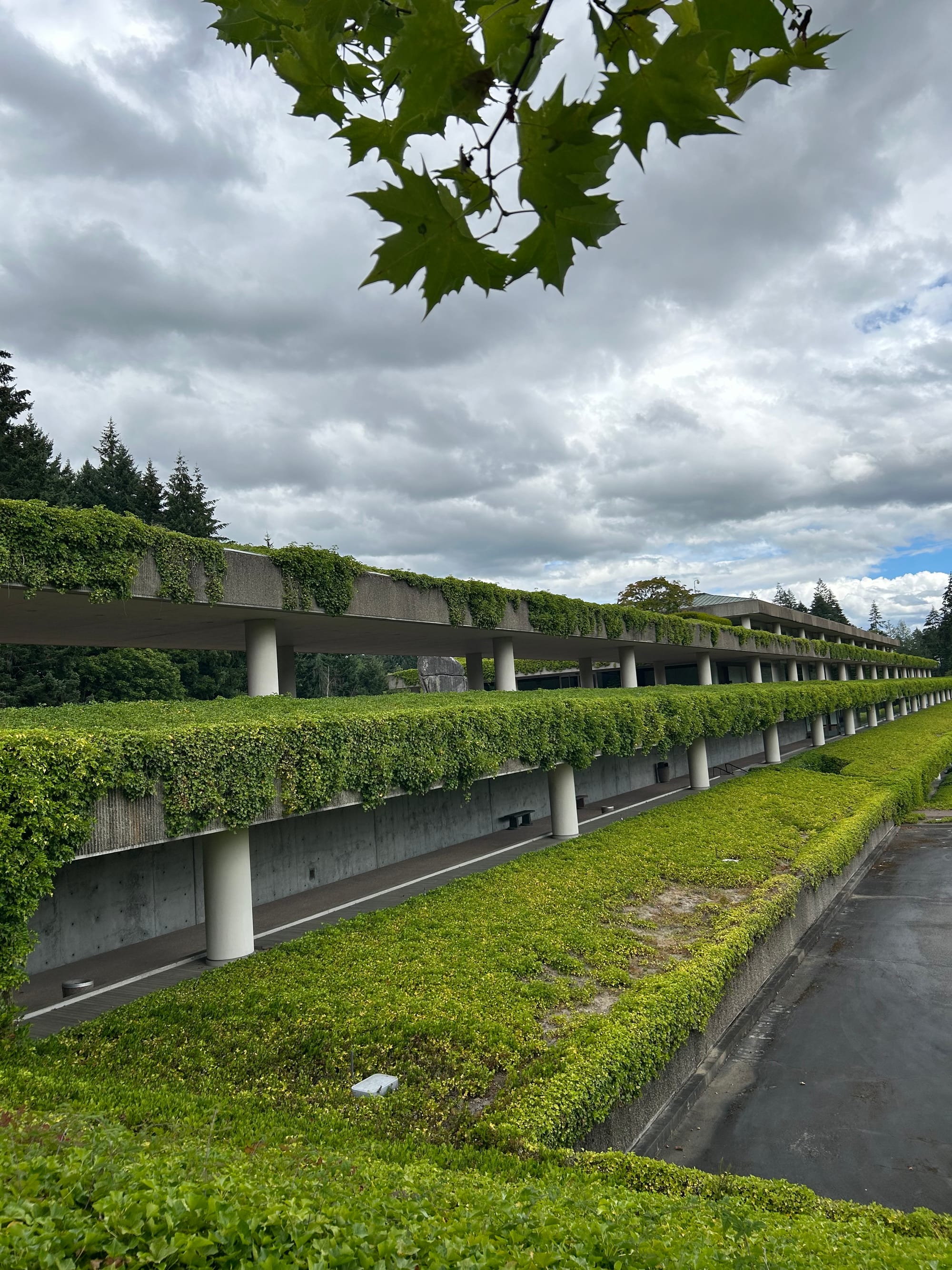
C & I have been trying to take more field trips, a resolution to get out of town and away from obligation, simply do something different for a day. The last time was the visit to the art museum I told you about (and thank you, dead letter reader C.M., for the lovely Frankenthaler postcard telling me about your visit to same!), and this time she took me down to the site of her childhood field trips to see the current strangely apocalyptic views which are the former Weyerhaeuser Corporate Campus. It’s in Federal Way, which means fighting your way through Seattle traffic, but we got lucky both down and back with traffic and arrived at the Pacific Bonsai Museum—which is free—in good time.
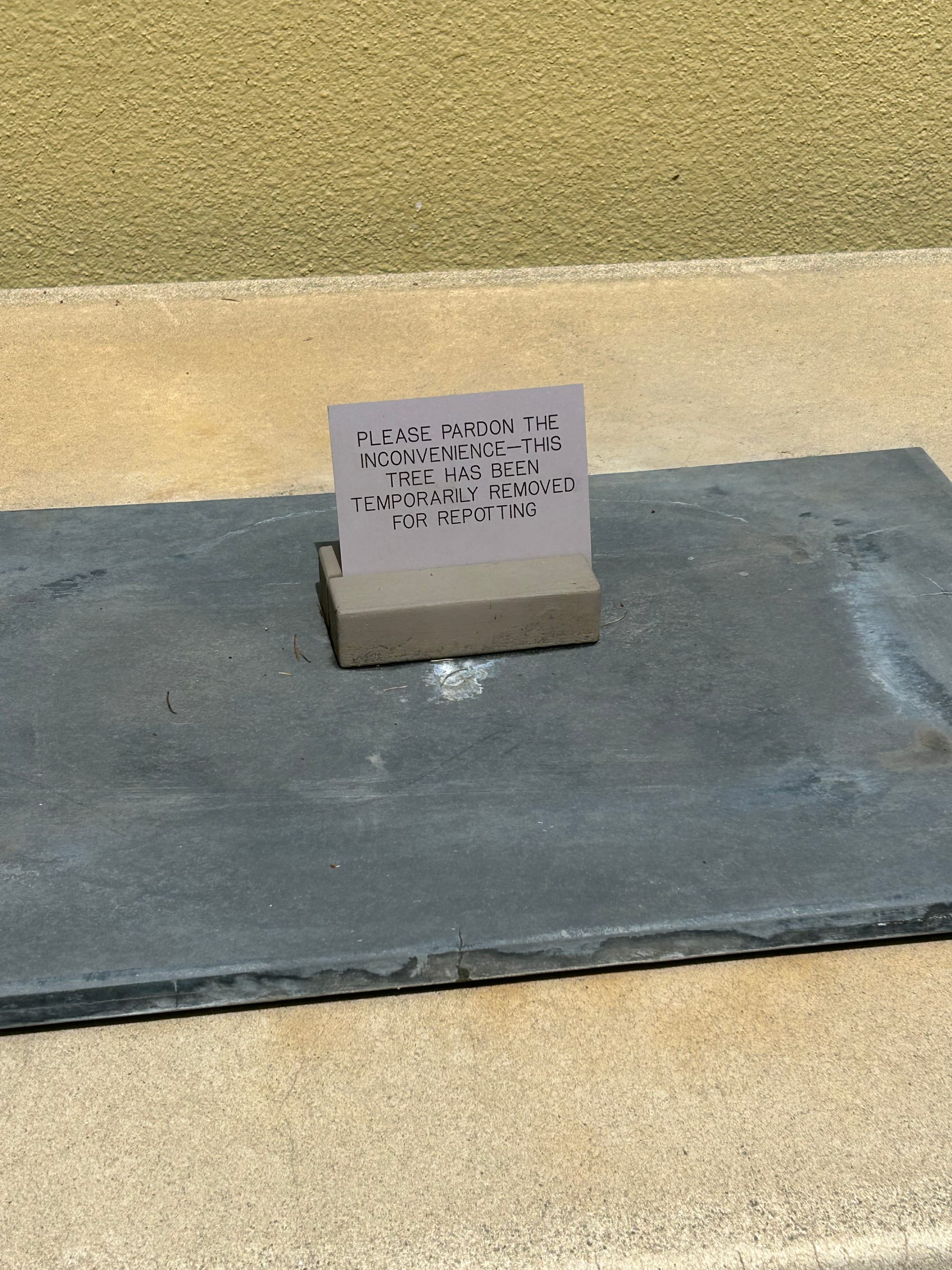
The collection is marvelous to look at and wonder about; tiny perfect groves of maples in which to picture yourself as a gnome, perfect trained limbs, with the occasional glimpse of copper wire to remind you that almost nothing of what you’re seeing is natural in any commonly understood sense of the word. We were past bloom time, but I think there is something there to look at in every season. Most of it is outside, except for one humid building for the more fragile trees, geometrical nooks formed by low tan walls leading you through the exhibits for each continent, with little pathways between for the staff to move among the trees and a carefully raked garden path. “Please help us respect the rake,” the museum guidelines say, and although I’m not quite sure what that means, we did our best.
The museum abuts the Rhododendron Species Botanical Garden, well worth the twelve dollar admission, and inside of which I promptly got us lost. Fortunately all roads lead either to the conservatory, which is a wonder for picturing yourself as the kind of person who owns a conservatory—wealthy Victorian? Post-apocalyptic hopepunk squatter in this very garden?—or back around to the gift shop, though we never did find the stumpery. I’m hoping we go back in the spring next year when things are in full bloom, and perhaps we’ll have better luck locating it then.
The Weyerhaeuser building is a brutal and uncanny thing, poised somewhere between preservation and abandonment, and it did not escape my notice that we were picnicking on the decaying body of a corporation in much the same way one would the ruins of a castle, or some other shrine to a fallen empire. There was a blast radius of blue confetti in the field where we parked, the remnants of someone’s gender getting revealed, zebra striped dragonflies darting between the willows, and we had a little picnic of black plums and sharp cheddar. It was the best day I’ve had in a while.
reading
I’m back on my M.F.K. Fisher and Madeleine L’Engle bullshit again, after a particularly fortuitous round of visits to the library’s free bookshelf, and am inching down the road of being a L’Engle completist, though with her vast catalog, I may never actually reach my goal. The current fixation is Two-Part Invention, which is a memoir of L’Engle’s marriage to Hugh Franklin. It seems as though it began as a journal she was keeping when her husband became very ill in his seventies, and then she built a framework out around of it, telling the story of their first meeting, both young actors living in New York City, their somewhat stormy courtship, and long marriage.
Not without struggle—whatever L’Engle’s dreamy qualities, I think she tells the truth, about the poverty, the times with young children when they were almost never able to be alone together, the difficulty of being both working artists, the fighting. There is a passage about obedience to him that I cannot quite assess as simply dated, more of her time than ours, because it seems so out of chorus. But still a happy marriage, and one of the things she attributes their happiness to is what she calls their ‘simultaneous recognition of wonder,’ their ability to share a sense of beauty.
It would be a good book regardless, but the extraordinary thing about the copy that I have—and the thing that almost made me leave it behind—is the annotations. I usually cannot abide other people’s annotations, because I end up irritable and argumentative, feeling as though I had tucked myself into a pleasantly dark restaurant booth with the author & someone is obnoxiously craning their head around to interject in our conversation. I almost put this copy back when I saw both underlining and highlighting—reading a copy with light underlining is tolerable, highlighting unbearable—but it seemed only occasional, and I thought I could always just bring it back to the free shelf and wait for another copy to find me if I was wrong.
As I read, I found we sometimes marked the same passages, my unknown reader in pencil, me with the little bronze book darts, and although she lost me with some argumentative passages and exclamation points, I realized, following the trail, that the reader had lost her own husband to a late in life—but of course never late enough—illness.
“We have been to the bottom,” the reader noted, “now again with Jim’s death.” Next to L’Engle’s prayers for mercy, she scribbled exclamation points and asterisks of agreement; where L’Engle described longing for her husband Hugh’s death to be clean, not a ‘painful nibbling away,’ the reader marked again, “Jim’s death.”
And finally, after deciding to not push any further unlikely and painful interventions he would not have wanted, L’Engle describes her final moment with her husband, saying, “It is hard to let go beloved flesh…Hugh is still warm.” My unknown reader writes into the margin: “…and then Nick became cool—after so long being fevered death brought cooling. And the cancer also died.” She dated her note May 17, 1997, morning.
The title page is torn out, likely to remove a book plate or personal inscription before donating, so I’ll never know who my unknown reader was, and yet we were somehow all three together, L’Engle writing to us both, though we read almost thirty years apart from each other.
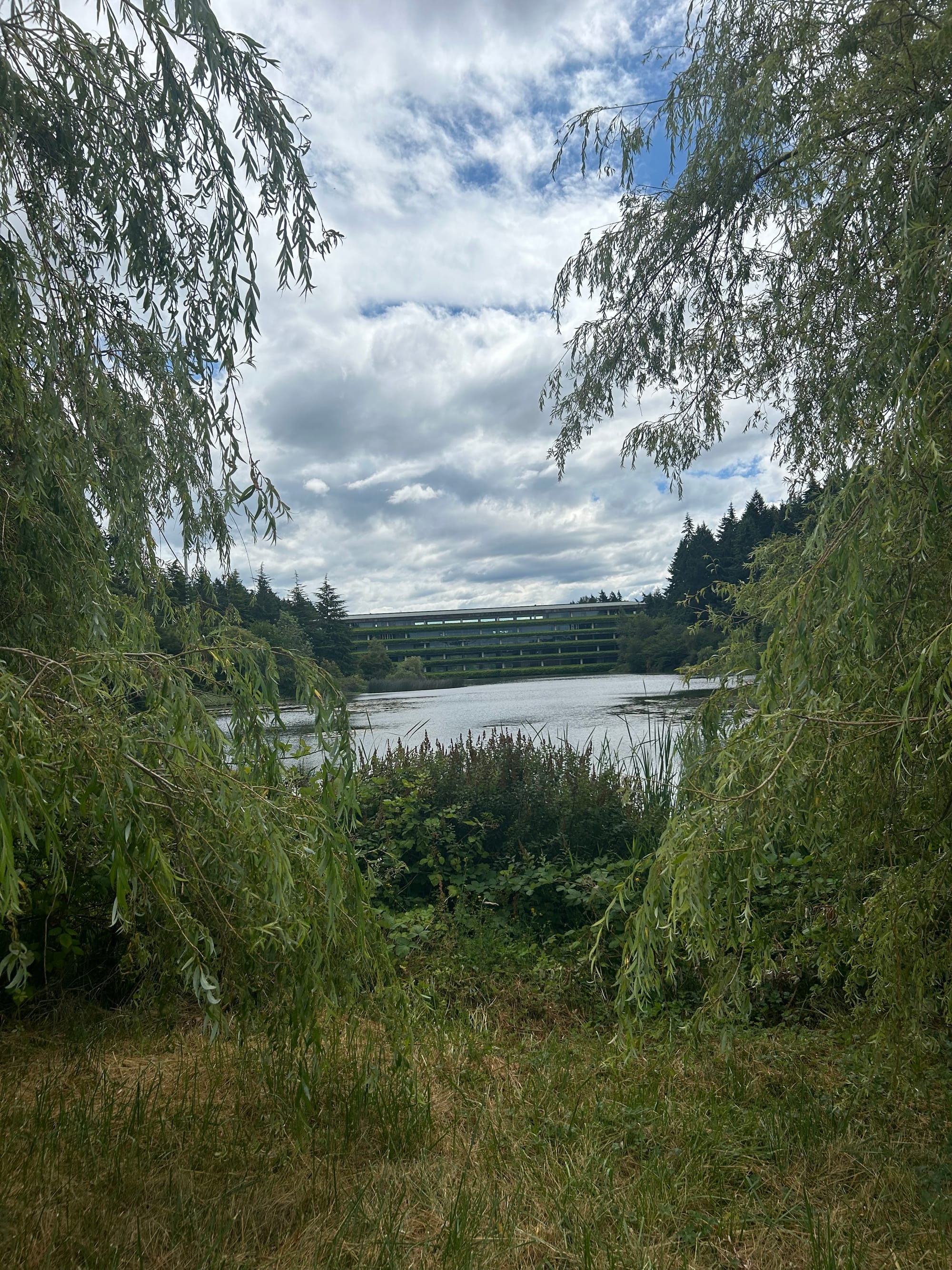
More soon, and in the meantime may you find a way to picnic on the ruins.