Dead Letter Department #130
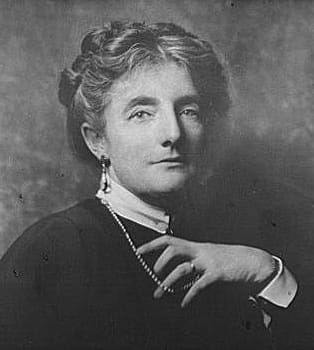
more on kathleen norris
First, it’s the physical object: hardbound, slightly smaller than the hardbacks of today, usually dark blue or black with ghostly pale imprints on the cover from where it stood shoulder to shoulder with its companions on the shelves for some years, some decades, before winding up for sale, and then in an envelope, and then with me. Some of them have inscriptions reading “Mrs. Clayt. Thomas,” or “To Anita, with best wishes for a speedy recovery & best of health. Love, Mary + Herman,” dated 4/22/38.
The paper is nearly brittle with age; you don’t have to be fussy, reading, but turning down a corner to save your place is ill-advised, as it may tear when you fold it back up again. The Palo Alto editions (P.F. Collier & Son Corporation by special arrangement with Doubleday, Doran & Company, Inc) are far finer and better constructed than Triangle Books. Although a Triangle edition was the only one to survive so far with dust jacket (tattered, now folded carefully in the back of the book), the dye on the cover is not quite fast anymore, so you will end up with dots of blue studded in the whorls of your fingerprints if you read for an hour or so.
Then, the distance in time. One memorable elderly character lost her fiancé at Gettysburg. Rent at 155st Street in New York is $37.50, for a split in a one bedroom apartment. A check for $100 is worth blackmailing someone over. Ice is bought, and then carefully chipped into glasses; cream delivered in the morning, avocados are alligator pears, and only available in California.
Everything is in California, except for what happens in New York, or perhaps on a steamer ship. The rest of the country might as well be a great blank mass, and although people go to Italy, England, Honolulu, nothing is quite as real as the golden hills, the eucalyptus over red tile roofs, the cold clean fog in San Francisco.
That’s a Norris-ism—cold clean fog. Beautiful things are so frequently referred to as clean, and when you think about the labor required to keep clean in a time before the modern washing machine and dryer, before kitchen conveniences and deodorant, it makes perfect sense.
There is always a perfect house. The house usually arrives well before the male love interest, a character unto itself. It may be a three-story white brick mansion, it may be a sprawling ranch house. It is, above all else, comfortable. The beds are fat and white (and clean), or covered in embroidered counterpanes, the windows are open with the curtains blowing in the breeze and fruitwood stacked in the fireplace, there are old paintings and pianos and soft carpets and flowers on the table; a garden, an orchard, a farm just down the hill, with the sprinklers making everything cool and lovely in the California heat.
The other perfection is the family that already lives there; always multi-generational, alternately comic and charming, busily upstairs and down and then out in the garden. The family needs the heroine badly, for some reason, a job as a governess to a willful young woman, a companion to a difficult child, or just an empty place at the table.
Usually the heroine is coming out of a terrible situation, sweating and straining through poverty. She is so relieved to get to the perfect house that she falls in love with it first, in the tradition of Pemberley. Usually there is a loyal old retainer of one kind or another and they speak in light dialect. Their inner lives do not exist; it is the prerogative of the other occupants of the house to move the story.
Usually there is an orphan, or more than one. Rarely does the heroine have anyone looking out for her, but the tragedy of those circumstances is not particularly lingered on. She does not have PTSD; she has a steamer trunk and a wire waiting for her at the next whistle stop. Sometimes, in a sort of orphan-squared situation, she also has charge of some other parentless person, perhaps an ill child, who she takes loving care of until she falls in love and then they conveniently improve and recede into the background.
Because of course she falls in love. That is usually the best part, after the house, and the family that is part of it. The heroine may be slender and dark with violet blue eyes, or tiny and honey-colored. She almost always falls in love with someone ill-suited first; someone married, someone cruel, a handsome fuckboy who has made promises he did not intend to keep, the kind of man who might accidentally become engaged to someone else. This part is stressful. It seems she may ruin her life (she will not ruin her life).
The real hero may arrive afterward, or have been present the whole time, watching carefully; he may be dark and square and study, or tall and fair, but there is something unsuitable about him, initially. He has a war injury that will require painful surgeries; he has a daughter nearly the age of the heroine; he has lived on a ranch his entire life & does not know how to talk to women at all. Nevertheless, he is the only man in the world for her, and he is someone important. The perfect family is The Family in town, because they own the factories or the farmland, or perhaps the real hero is tremendously wealthy, or a surgeon pioneering medically implausible sounding surgeries. Everyone is so happy that they are in love, except for the occasional bad apple, who may drive off a cliff or may end up on a train back to New York, but either way, he’ll never bother them again.
This makes it sound silly, I know I’m making it sound silly, but I feel extremely tender & fond towards these books. I like the descriptions of dresses and hats and how happy it makes people to wear them. I like the pattern, and knowing that the swoop and rise of the roller coaster will set me safely down again at the happy ending, everyone married who ought to be, and settled into the perfect house.